
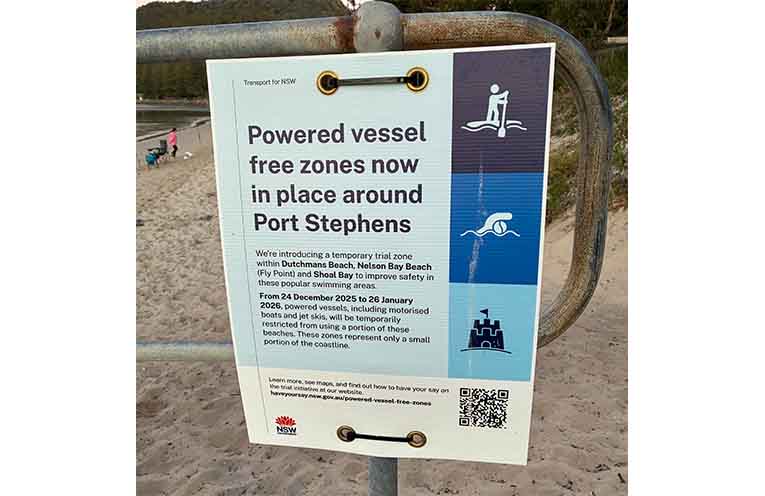
BOATING associations have united in their call for the trial of powered vessel exclusion zones in Port Stephens to be fair and equitable.
Transport for NSW (TfNSW) says the trial, which ends on Australia Day, is designed to reduce conflict in busy areas and improve safety for swimmers, paddlers and recreational boaters.

Jet skis are among the watercraft being banned.
However, the Newcastle and Port Stephens Game Fish Club has questioned the feedback process, noting that only two of the 16 boat ramps inside Port Stephens have signage displaying the QR code for users to leave feedback, whereas there are numerous signs along beaches and swimming areas.
“That imbalance is hard to ignore,” said President Troy Radford.
“We are repeatedly told this is only a ‘trial’ and that community feedback will guide future decisions.
“But that raises an obvious question: is the feedback process itself fair, open, and genuinely accessible to everyone who uses our waterways?”
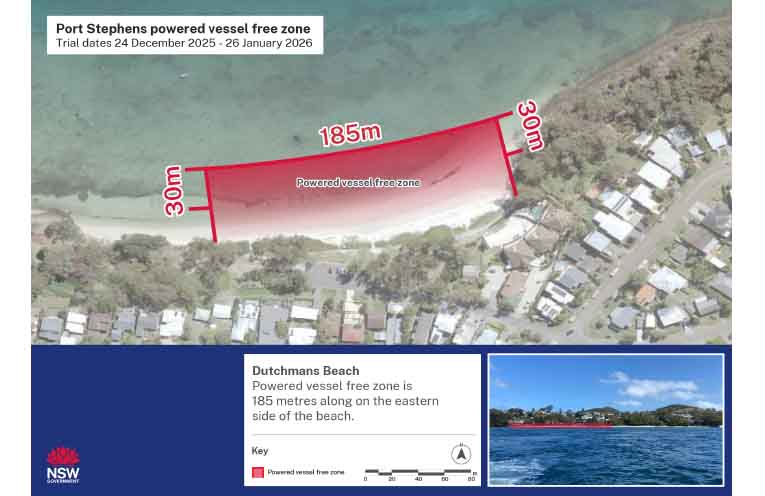
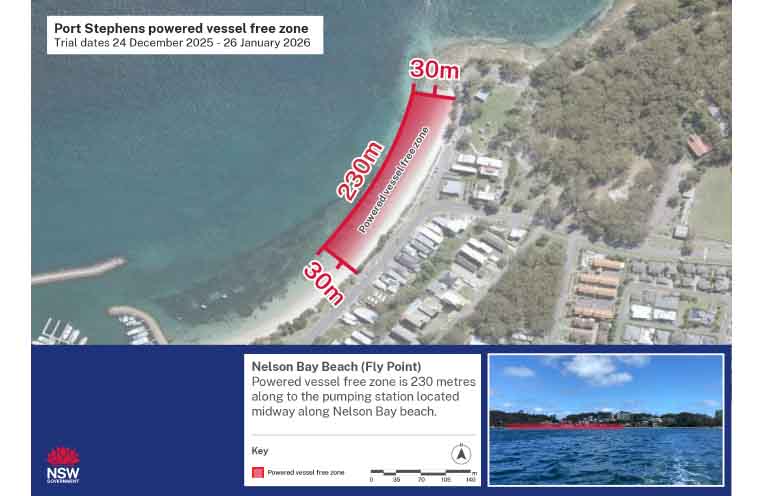
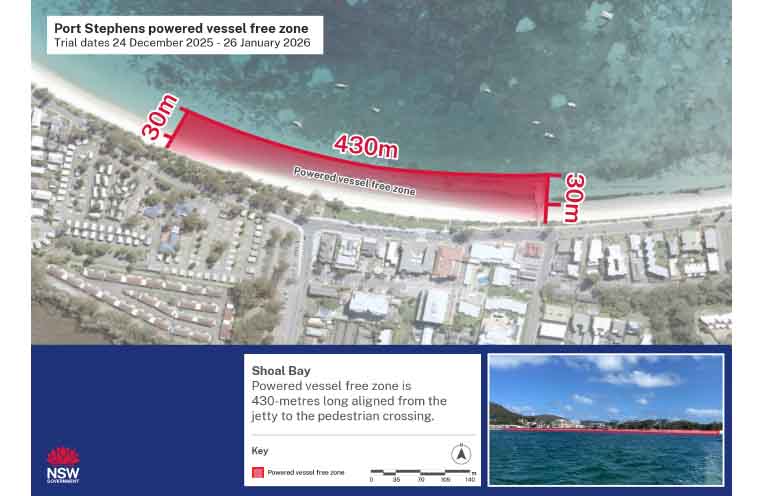
Three locations were selected for the trial based on safety data.
1) Dutchmans Beach: a 185-metre-long area on the eastern side of the beach.
2) Nelson Bay Beach (Fly Point): a 230-metre-long area from Fly Point in a southwest direction to a pumping station midway along Nelson Bay beach.
3) Shoal Bay: a 430-metre-long area westward from the jetty to the pedestrian crossing.
Mr Radford said the majority of powered vessel users in Port Stephens are not locals.
“Many launch once, spend a day on the water, and leave.
“If they do not use one of the two boat ramps with signage, how are they supposed to know the trial exists at all, let alone that they can provide feedback?
“Port Stephens… is a shared, working waterway that supports recreational boating, fishing, tourism businesses, charter operators, and local jobs.
“Decisions that reshape access to that waterway must be based on balanced, transparent, and inclusive consultation.
“Anything less risks undermining public trust.”
The Club wants equal signage at all boat ramps; clear on-water education during the trial period; adequate timeframes for public awareness; and a feedback process that actively reaches all user groups.
Process ‘troubling’
Boating Industry Association (BIA) spokesperson Neil Patchett said the State Government announced the trial of powered vessel exclusion zones on social media in November, without consulting or providing any evidence of concerns to key stakeholders.
“The boating sector is accustomed to the long-standing norm of consultation prior to implementation of regulatory measures,” he said.
“This current unusual process is troubling, and runs the risk of setting a poor precedent, which could be used in other areas with little regard for the boating public.
“Concerningly, there seems [to be] an imbalance in signage.
“The boating public should be provided with the same level of awareness of the trial and opportunity to comment.”
The BIA said the zones should not be reintroduced after the trial, or applied elsewhere, until TfNSW has provided the following:
—appropriate consultation with key stakeholders
—long-term, robust and relevant data and evidence of incidents and unacceptable behaviour by “powered vessels” in the trial areas
—evidence of what education, compliance and enforcement activity has taken place in the impacted areas over the past 10 years
—evidence of what alternatives to Exclusion Zones have been considered and tried; and
—data on the social and economic impact of the Exclusion Zones.
The BIA said the poor consultation process comes on the back of TfNSW increasing boating fees to record levels without consultation.
By Sue STEPHENSON