
ONE of my favourite parts of my role with the NOTA is sharing incredible local history accounts, often directly from those who experienced it firsthand!
The story below came from Rob Robinson, who shares memories of life as the son of a lightkeeper on Fingal Island at the completion of World War One.
“Five and Seven”, by Rob Robinson.
Born to parents with a taste for adventure, my early life was exciting, often hazardous.
But adventure is rarely without hazard – indeed, one almost expects it.
At the time of the incident I’m about to relate, in 1919, I was seven years old.
My brother was five years old and we lived on an island off the east coast of NSW.
My father, ex-Royal Navy, had migrated to Australia and was offered a job as a lighthouse keeper.
One of his early appointments was a posting to this tiny speck of land in the Pacific.
Already in residence were two other lightkeepers.
Other keepers of that period were Mr Priest and Mr Sullivan and their families.
Mr Thompson arrived a little later.
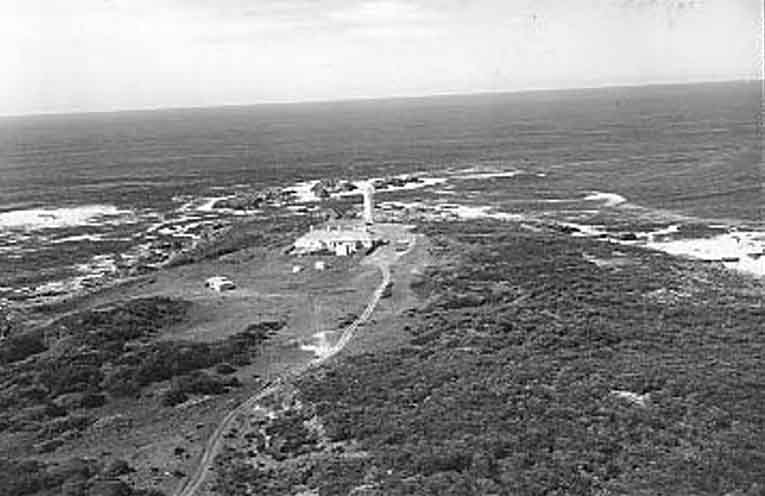
The lighthouse at Point Stephens is less than a mile from the mainland and our only access to civilisation was by way of a narrow sandspit, under eight feet of water at high tide.
Mostly treacherous and unforgiving, it had a nasty record of accidents and was held in great respect by all who used it.
Once every two weeks we rowed across the spit to collect the stores and mail.
This was an adventure my young brother Lindsay and I loved.
In our youthful eyes, the 18ft whaleboat was as safe as an ocean liner.
In such an exposed position, our island was at the mercy of the elements and was frequently lashed by gales.
For two weeks a storm had raged and we were hungry for mail and fresh provisions.
One morning we woke to find the wind had dropped and my dad and Mr Nelson, the keeper next door, decided to make the crossing.
They had promised to take my brother and me on the next trip over, so, despite mum’s protests, we set off.
Mr Nelson, a big man and an excellent oarsman, led the way down the sloping path to the jetty.
The boat was lowered over the side by crane with two boys already on board.
My job was to steady the boat’s descent by holding on to the vertical ladder.
I was proud to be entrusted with this very important task.
With strong pulls on the oars, we rapidly approached the spit and the most dangerous section was just ahead.
The seas were boiling where two opposing currents met and Dad looked worried.
I knew it was because of my brother and me.
But Mr Nelson urged us to press on – there was a gleam in his eye that I had seen on other occasions.
The boat hit the rough water and bounced and weaved as we reached the point of no return.
Suddenly, a twisting, curling wave surged up on our stern quarter. In a second it slewed us broadside on and with a savage heave, the big boat rolled over.
We were flung into the sea.
Desperately, I pawed my way to the surface and looked around for the others.
The boat was upside down and my father and Mr Nelson were swimming around in circles.
With a terrible pang, I realised my younger brother had vanished.
Mr Nelson grabbed my arm and held me afloat.
“Where’s Lin, find my brother,” I screamed.
“Steady on, young fella,” he said.
My father repeatedly dived, surfaced and dived again.
I saw him swim to the upturned boat and disappeared underneath.
Agonising seconds later he reappeared with Lindsay in his arms.
The little chap didn’t look good.
We struggled to the beach and started to work on Lindsay.
After what seemed ages, he spluttered and coughed up a lot of water.
We knew he’d be OK when he started to cry.
By this time the boat had washed into shallow water and the two men were able to right her.
The seas had dropped considerably and we loaded the stores.
On the way home Dad said hopefully, “Now boys, we don’t want to worry your mother, so let’s say nothing about what happened. All right?”
But, have you ever tried to stop little boys telling tales?
After the frightening incident “Captain” the horse was taken to get the stores.
He would turn his rump to the waves in defiance of the dangers that we knew so well.
By John ‘Stinker’ CLARKE