
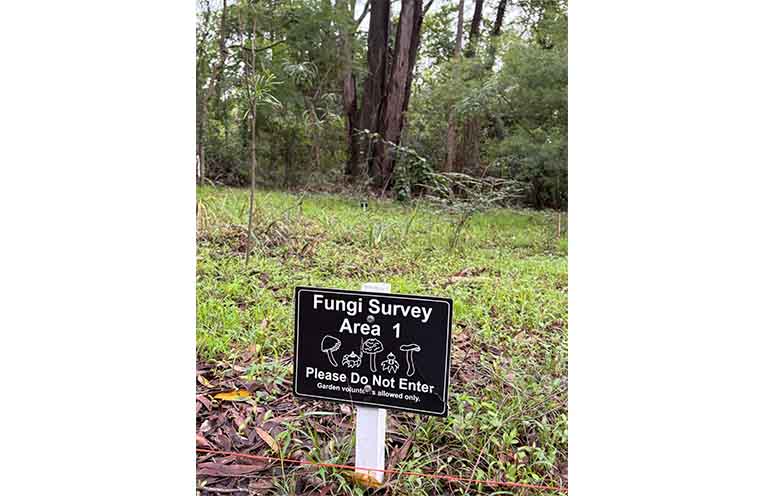
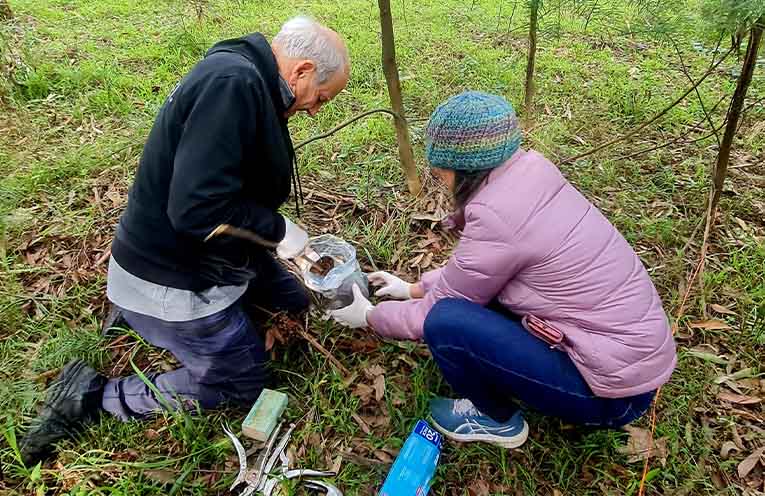
THE Hunter Region Botanic Gardens has secured a significant $148,984 grant from the NSW Government’s Environmental Trust to undertake a pioneering fungi DNA project that promises to elevate the Gardens’ scientific standing while contributing valuable new knowledge to environmental conservation.
The project will establish one of the first DNA-verified fungal reference libraries developed by a regional botanic garden in Australia, helping researchers better understand the complex and largely unseen fungal networks that support healthy ecosystems.

While fungi are often associated with mushrooms, scientists say the visible fruiting bodies are only a small part of a much larger underground system.
Fungi play a vital role in helping plants access water and nutrients, improving soil structure, recycling organic matter and supporting ecosystem recovery following disturbance.
Emeritus Professor Tim Roberts AM said the research is particularly important as environmental managers face increasing challenges from climate change, habitat loss and the growing need for ecological restoration.
“The project is expected to reveal hundreds of fungal species that have not previously been documented in the Hunter Region,” he said.
“By comparing DNA collected from soil samples with preserved fungal specimens, researchers hope to uncover the rich biodiversity hidden beneath the surface and gain a clearer understanding of how healthy ecosystems function.”
The grant also strengthens the Gardens’ role as a centre for research, education and conservation.
“This project demonstrates that the Hunter Region Botanic Gardens is much more than a visitor attraction,” Professor Roberts said.
“It is a place where science, conservation, education and community engagement come together.”
The initiative will foster partnerships with universities, environmental organisations, land managers and citizen scientists while generating research with applications extending well beyond the Gardens’ boundaries.
The long-term benefits are expected to be felt across the region.
Data gathered through the project could help guide bush regeneration, habitat restoration, biodiversity monitoring and post-mining rehabilitation efforts throughout the Hunter.
The findings may also provide practical tools for councils, National Parks staff, educators, LandCare groups and industry to make more informed environmental decisions.
As researchers prepare to explore the hidden world beneath the soil, the project highlights a simple but important truth: while plants may be the stars of a botanic garden, fungi are the unseen workforce that helps keep entire ecosystems alive and thriving.
By Jacie WHITFIELD