AFTER a long career in the coal industry, Jacqui Purcell from “In Our Hands Family Farm” decided to study agriculture and transition to a lifestyle of low environmental impact.
At a workshop organised by Port Stephens Council, Jacqui shared her secrets for turning waste into a valuable resource for any garden, through composting and worm farming.

These processes are nothing more than what already happens in forests, where organic materials fall on the floor and are broken down into a nutrient-rich soil.
Jacqui said, “I do not ever put my green bin out on the curb because anything going in a green bin is a future composter that you want to keep to yourself in your own backyard”.
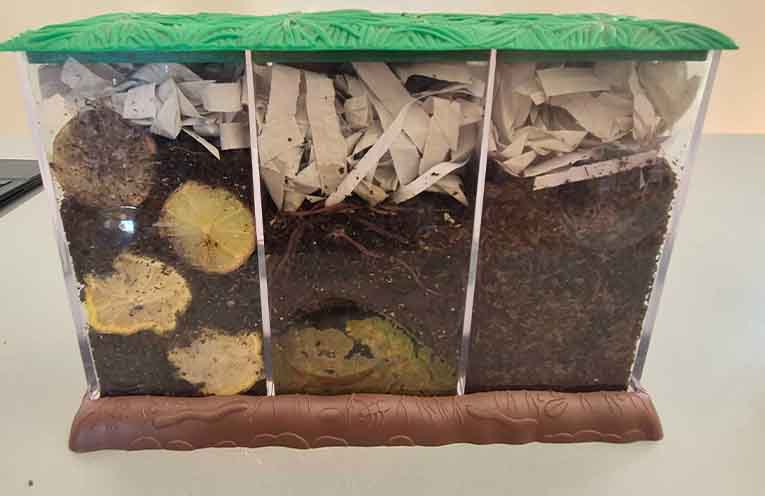
All sorts of leftovers can be used: there are “greens” like food scraps, grass clippings and coffee grounds, and “browns”, like fallen leaves, straw, paper, cardboard and fabric.
The ideal ratio for a compost pile is about 25 brown parts to one green part, and there is an easy way to know how well everything is going.
“If you open a composter and can’t find any insects, there’s something very wrong.
“You want a big diversity of insects, and also things like bacteria and fungi.”
Participants in the workshop also had the chance to examine containers full of the creatures responsible for making the soil richer.
Among all organisms that inhabit the soil, worms can be used in a unique way.
Worm farming is a similar process to composting.
In exchange for careful upkeep, they can produce significantly richer soil in a short amount of time.
Composting and worm farming can require specialised equipment, however Jacqui believes anyone can do them at home, in gardens of any size.
By Nico LOMBARDO