
ONCE a little-known NSW island, Broughton has become a ‘must visit’ destination for fishermen, boaties and day trippers.
Over recent years, the island has changed socially, for the better, with an influx of families rather than a domination of fishermen.
Bird watching, hiking, photography, snorkelling and of course, fishing, are all part of the island experience.
I have been fortunate to have been a regular visitor to the island since my first trip in 1978 on board the “Waranah” with the late Col Jenkins.
It is pleasing to report that the fishing, on and around the island, remains excellent.
However, there is far more to Broughton with whales, seals, turtles, giant stingrays and dolphins cruising through the opal blue water.
Eight nautical miles (14km) north from the heads and two kilometres off the coast sits Broughton Island, three kilometres long and 2km wide.
The island was named by Captain James Cook after his mate Captain William Broughton.
The history of Broughton Island is rich and colourful, which I discovered whilst researching my book “Broughton Islanders” back in 2013.
The first to arrive were Worimi folk.
Ample evidence indicates the presence of Aboriginal people who may well have walked onto the “island” before the ice caps melted.
European lobstermen were recorded back as far as the 1880s along with the Chinese who, after failing to find gold out west, moved to the coast.
On the island, the Chinese caught fish, trapped lobsters and collected muttonfish (abalone), which were salted and sent either to their countrymen, still at the diggings, or transported back to China.
In the 1890s, Italians were dropped off on the island by passing coastal traders to trap lobsters and were picked up, with their catch, on the return journey to Sydney.
It is recorded that they set up to 900 pots around the island.
The Italians never ventured onto the mainland.
It was 1906 when French Scientist Dr Danzig, the nephew of Louis Pasteur, arrived on the island with his entourage of assistants and researchers.
A plague of rampaging rabbits was causing havoc in the pastures of sheep farmers in NSW, turning green fields into deserts.
The aim of the French involvement was to introduce rabbits onto the island as part of a controlled study, then inject them with a virus in the hope that it would spread from one rabbit to another.
Unfortunately, the experiment failed miserably so the French team left the island – but the rabbits did not.
The rabbits remained until 2009 when they were eradicated by the National Parks and Wildlife Service.
With the rabbits went the rats and cockroaches, resulting in a return of natural vegetation and an increase in the bird population – from the tiny cisticolas, shorebirds, oystercatchers and quails to the apex predator, the sea eagle.
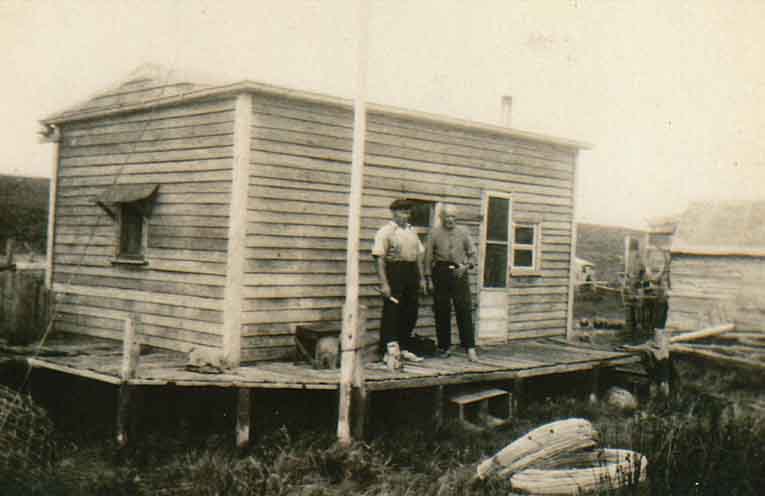
Sometime around 1920 a small Greek settlement was established behind the first line of dunes on the northern aspect of the island, referred to as North Harbour.
This was a semi-permanent community of lobstermen which was abandoned following a second fire in the late 1930s.
A small gathering of privately owned huts, along with a NPWS building, remain nestled out of the conditions in Esmeralda Cove, known as East Harbour.
The beaches around the island are spectacular, with excellent fishing for whiting and flathead in the summer months. It is the surrounding reef system that provides ideal habitat for snapper, mulloway, teraglin, a growing population of pearl perch, and kingfish, which gets the recreational fishers very excited.
By John ‘Stinker’ CLARKE