
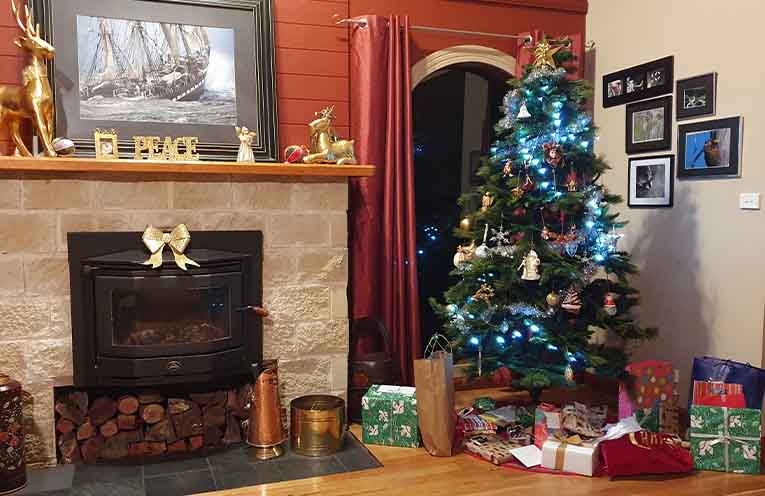
HAVE you ever wondered why we decorate cone-bearing trees, eat turkey and ham, light candles, pull bonbons, hang Christmas stockings, decorate homes, make wreaths and credit Santa with delivering presents via flying reindeer?
Most of us know that many Christmas traditions from the Northern Hemisphere sailed south with immigrants.
But many so-called Christmas traditions originated from pagan rituals associated with the Winter Solstice, just before Christmas.
Burning Yule logs, present giving, decorating homes with holly, kissing under the mistletoe and making wreaths were activities designed to nurture new life, fertility, and promote peace and hope.
Before Clement Clark Moore wrote the poem “A Visit from St Nicholas” in 1822 and before Coca-Cola transformed Saint Nicholas into an extension of their brand, the 4th Century Bishop of Myra in Asia Minor was being revered for his kindness and generosity – especially to children and the needy.
As Christianity spread, the Greek Saint Nicholas evolved.
For centuries, the Dutch have celebrated Sinterklaas on 5 December, which is St Nicholas’s Names Day.
Traditionally children leave their shoes out in the hope they will find them filled with treats and presents in the morning.
In some regions of Italy, La Befana was believed to sort “the naughty” from “the nice” on 6 January.
Arriving by broomstick, she would fill stockings with presents for the good and lumps of coal for the naughty.
Latvia claims to be the birthplace of the first decorated Christmas Tree when, in 1510, a pine tree was erected in the Town Hall Square in Riga; a tradition that continues to this day.
Latvian children receive presents on Christmas Eve but only after they entertain the family with a song, a poem or a musical performance.
Before the discovery of the Americas, a Christmas fowl was usually a goose, a chicken or, for the wealthy, a peacock.
Turkey didn’t become a popular dish among the general population until the 19th Century, thanks to “A Christmas Carol” and Ebenezer Scrooge.
And what Christmas dinner would be complete without a potato dish.
For that we can thank the Spanish who brought this plant, native to the Andes, back to Europe in the 16th Century.
While originally bonbons were designed to hold treats in the French court, London confectioner Tom Smith adapted them to market his sugar almonds.
In 1861, he changed the name to Christmas Crackers after he added an explosive device that popped when pulled apart – describing them as a “Bang of Expectations”.
Christmas traditions are as varied as the communities that established them, but most would agree that the most important gifts are that of Peace, Hope and Joy.
By Marilyn SANDERSON