
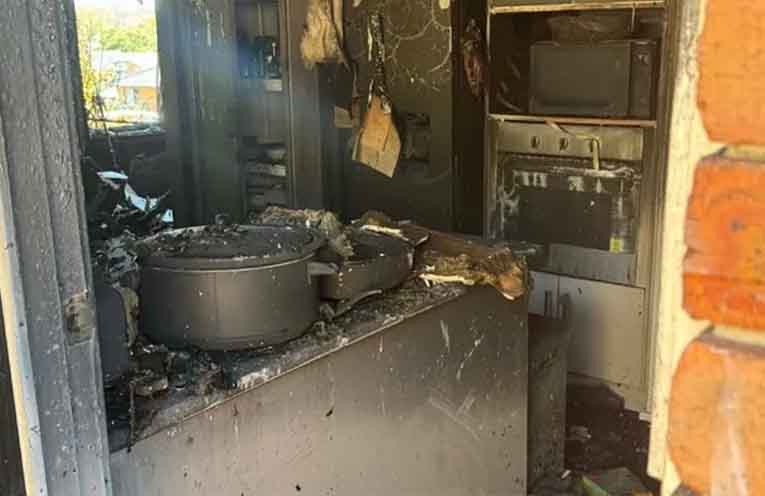
A TRAGIC house fire in Raymond Terrace has become an urgent reminder to households across the region about the importance of working smoke alarms and safe charging and storage of lithium-ion batteries.
In the early hours of 27 November, a mower battery that was on charge sparked a blaze that destroyed a family’s home, leaving them with nothing just weeks before Christmas.

A GoFundMe page, “Help rebuild the Tukana’s life after tragic fire”, has been established to support Monique Tukana, her children Mya and Tyson, and their extended family as they begin the daunting task of rebuilding.
Neighbours and community members are encouraged to support the appeal as they work to recover from the devastating loss.
Fire and Rescue NSW stresses that smoke alarms remain the first line of defence in home fires.
Installed and working alarms can provide precious early warning, giving residents more time to escape.
Across NSW, fire safety campaigns highlight that without a functioning smoke alarm, the risk of fatality in a fire dramatically increases.
Even in accidents not linked to battery fires, smoke alarms are critical.
Home fires can spread rapidly, producing thick, toxic smoke that can incapacitate occupants within minutes.
Regularly checking alarms, including monthly tests and annual battery replacements, is a simple habit that can protect your family.
Lithium-ion batteries power a wide range of everyday devices, from lawn equipment and mobile phones to e-bikes and e-scooters.
They also present a growing fire risk when improperly charged, stored or damaged.
According to Fire and Rescue NSW, incidents involving lithium-ion batteries are on the rise, with hundreds of fires recorded in recent years linked to these power sources.
A key priority is safe charging and storage:
– Use the correct charger — only the one supplied with the device or approved for that battery. Never mix and match incompatible chargers and batteries.
– Avoid unattended charging — never leave batteries charging overnight, while you sleep, or when you’re out of the house.
– Choose safe locations — charge large batteries (such as for e-bikes, e-scooters or power tools) in a garage, shed or carport, away from living areas, exits and flammable materials.
– Hard, non-flammable surfaces — always set devices on concrete or tiles — not on beds, couches or carpets — while charging.
– Inspect for damage — swelling, bulging, leaks, cracks or overheating are warning signs. Don’t charge damaged batteries, and dispose of them safely.
Charging devices like e-bikes and e-scooters near exits can also block escape routes in a fire, another risk FRNSW specifically warns against.
Batteries should never be placed in household rubbish or recycling bins, as they can ignite during waste handling.
Instead, take old or damaged lithium-ion batteries to appropriate recycling points, and tape over their terminals before drop-off.
By Jacie WHITFIELD